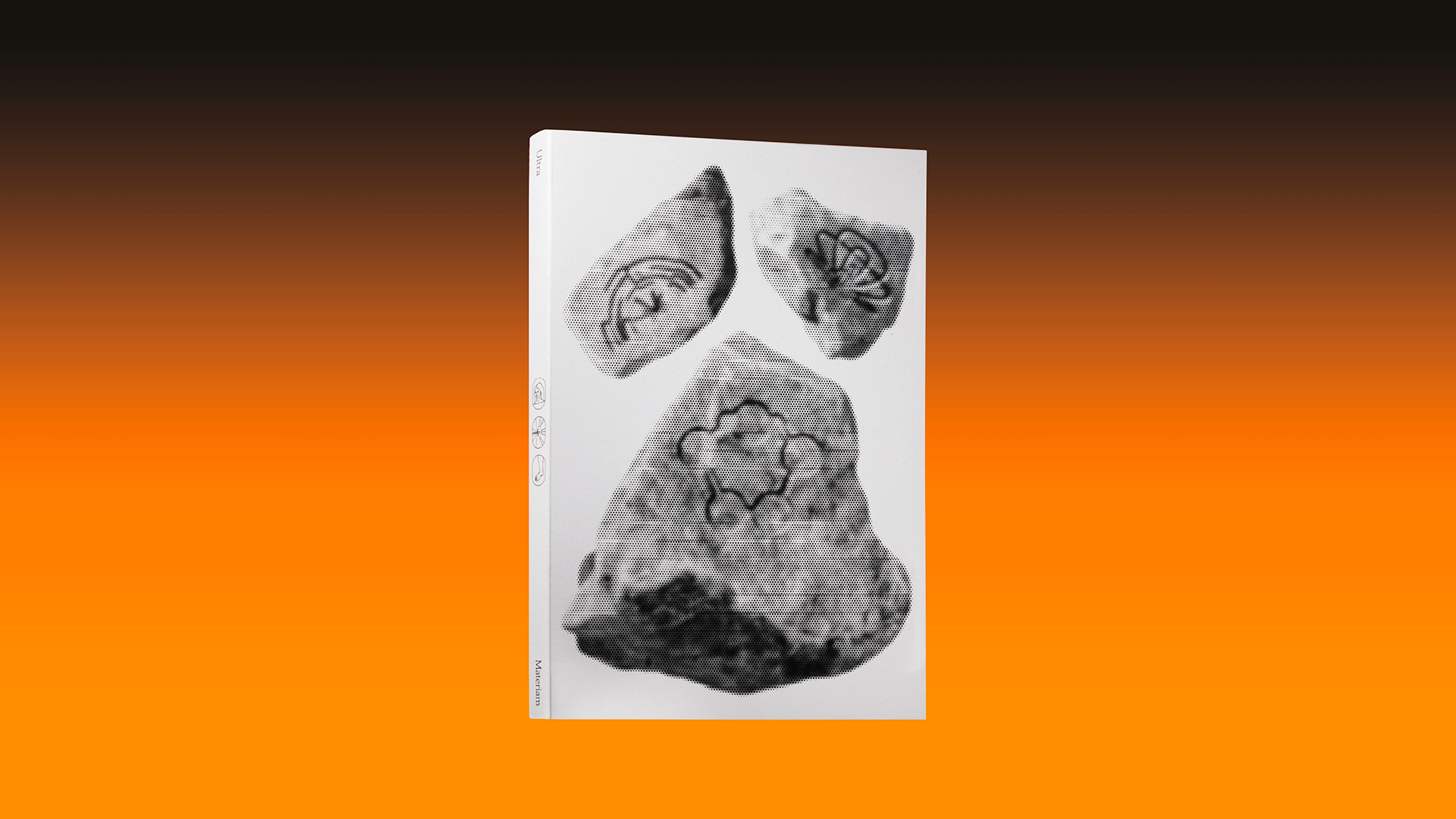
Ultra Materiam is a project that rethinks how to represent complex, abstract data related to human psychological complexity, addressing the limitations of the Golden Record by placing the individual’s diversity at the forefront.
In 1977, the Voyager space probe was launched, carrying the Golden Record, a disc encoding a static message from humanity to the universe. While groundbreaking at the time, today it feels outdated, as it fails to represent the diversity of human identity and the evolving nature of society. This project raises the question: can message truly reflect the complexity of humanity over time and the individuality of each one of us?
Through the comparison of six anthropological theories, Ultra Materiam proposes a new model for understanding identity, consisting of three interconnected layers: personality, morality, and physiology. These layers are visually encoded using innovatives graphics and advanced smart inks, which react dynamically to environmental stimuli like light and heat, ensuring the message adapts and transforms.
The physiological data, screen-printed with thermochromic ink, disappears when exposed to heat, symbolizing the temporary nature of the human body. In contrast, personal and moral data, represented with photochromic ink, emerge only under sunlight, illustrating that these deeper aspects of identity are not immediately visible but gradually revealed.
All three layers are integrated into a single plate, providing a rich, evolving representation of individual’s identity. Unlike the static Golden Record, this disc responds to external stimuli, offering a dynamic portrayal of the individual’s complexity. This approach emphasizes that identity is not fixed but fluid, constantly evolving with external influences, much like our selfs.
By combining scientific inquiry with artistic expression, Ultra Materiam seeks to address the gaps left by Voyager, offering a more accurate, adaptable, and inclusive representation of humanity’s complexity for future generations.